Showing posts with label picture books. Show all posts

Friday, October 18, 2013

The Best Picture Books Featuring Exotic Animals


Here are some picture book animals that defy common wisdom.

What do you think of when you think “exotic animal?” Alpacas? Komodo dragons? Marmosets? Pythons? Blue-tongued skinks and Argentinean tegus? Sure, those are exotic. But in the picture book world, so are tigers, salamanders, slugs and bobwhites. Why? Because they don’t sell.

In picture book language, exotic animals are any animals that don’t sell well, no matter how common they are. This is why we see plenty of picture books that feature cats, dogs, cows, ducks, and monkeys. Kids know them and love them. Familiarity breeds cash.

Now, this doesn’t apply to non-fiction picture books, which are designed to teach young readers about capybara, geckos, three-toed sloths and the unfortunate albatross. But when it comes to fiction, making an “exotic” animal your hero often leads to a rejection letter that says they love the story, but could you make the main character a duck? Or anything else you’ll find on Old MacDonald farm.

So here’s a list of some authors who took a chance on strange little critters and found (great) commercial success.

Top Exotic Creatures in Picture Books

  1. Wombats. These are a recent arrival on the picture book scene, but have proven immensely popular and may become an “it” animal, thanks largely to Charles Fuge’s delightful “Little Wombat” series. Following in those cute footsteps is Wombat Walkabout by Carol Diggery Shields. It contains enough Australian slang to make any wombat homesick. And you know your species has arrived when it earns its own holiday book. Christmas Wombat by Jackie French gives us the high holidays Down Under
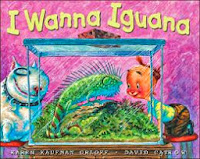
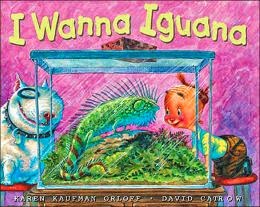
  2. Iguana. Another animal rarely seen in picture books, but popping up more often is the iguana. T.E. Watson’s (2001) and Karen Kaufman Orloff’s (2004) two different I Wanna Iguana books might make any kid actually want an iguana, and Orloff’s has now launched an entire “I Wanna” series. There’s also MaƱana Iguana (Ann Whitford Paul), which gives the desert lizard a Mexican flair, and Private I. Guana (Nina Laden) that gives the little-seen lizard a detective license and air of mystery.
  3. Llama. There aren’t many books that feature a llama, but what Anna Dewdney started has led to a wildly popular series. There’s Llama Llama Red Pajama and Llama Llama Mad at Mama and a whole bunch more. Llama is fun to say, rhymes
    with plenty of words and, unlike wombats and iguanas, hasn’t inspired a lot of imitators.
  4. Naked Mole Rat. And coming in as the most exotic animal in picture book fiction is the naked mole rat. Any surprise? Mo Willems’ Naked Mole Rat Gets Dressed is the only fiction picture book to feature the naked mole rat because even Mo struggled to make them cute (of course, he succeeded!). And even though he has several series under his belt (Pigeon, Elephant and Piggie, Cat the Cat), he’s resisted any pressure to create Naked Mole Rat Plays Dress Up, Naked Mole Rat Goes Trick or Treating or Naked Mole Rat with Nothing but the Radio On.

So exotic animals can be blue jays or cardinals, but not pandas or lions. In picture book parlance, an exotic animal is anything that doesn’t sell – until it does. I’m thrilled that some authors and publishers have defied convention, and I hope we’ll see more exotic animals like bandicoots or bush babies in picture books. Who knows? It just might get kids to read some of those small-selling non-fiction books about their new favorite (and strangely exotic) animal!


Wednesday, December 19, 2012

New Christmas Classic Picture Books

Five great new Christmas picture books.

There are plenty of classic holiday picture books out there. How the Grinch Stole Christmas by Dr. Seuss, The Snowman by Raymond Briggs and Olive the Other Reindeer by Vivian Walsh immediately come to mind. But there are plenty of new Christmas picture books to choose from. After all, Christmas is the season for giving, and publishers keep giving us new Christmas books (because they sell!).

Here are a few Christmas picture books I've thoroughly enjoyed.

  1. Bad Kitty Christmas – Nick Bruel returns to the picture book format that launched Bad Kitty in the first place. This time, he spins two stories into one book, the first featuring Bad Kitty’s antics early on Christmas morning told, as always, with a romp through the alphabet. The second finds Kitty on his own, with no place to go for Christmas, until he finds a caring stranger. Christmas gains a new and heartwarming meaning for both of them.
  2. Pete the Cat Saves Christmas -- Author Eric Litwin uses his rhythmic abilities to set a new Pete the Cat story to The Night Before Christmas. Santa’s sick and Christmas could be cancelled. It’s up to an enthusiastic Pete the Cat to deliver all the presents – and in the spirit of Christmas, he gives it his all. Illustrated by James Dean.
  3. Charlie and the Christmas Kitty -- Poor Charlie. Everyone’s favorite ranch dog gets a Christmas present he didn’t want – a cat! If your child balks at socks or sweaters or that thing they can’t figure out from Aunt Gertrude, then this book could teach them to appreciate it (even if it’s not as a kitten!). Written by Ree Drummond and Illustrated by Diane deGroat.
  4. Turkey Claus -- In this sequel to Turkey Trouble, Turkey’s still in trouble. He may have survived Thanksgiving, but now Edna wants turkey for Christmas dinner! Can Santa get him out of trouble? What’s our intrepid turkey to do? Written by Wendy Silvans and illustrated by Lee Harper.
  5. How Do Dinosaurs Say Merry Christmas?-- This series from author Jane Yolen and illustrator Mark Teague is a picture book phenomenon. If your little reader already knows How Dinosaurs Say Goodnight or I Love You, then this book is a great fit in the series. I mean really, Christmas wasn’t even around yet, so how did they say “Merry Christmas!”? And I know this one’s a week late, but there’s also a How Do Dinosaurs Say Happy Chanukah book, too.
 

So if you haven't picked up a Christmas picture book for your little reader(s) and are looking for something fun that they'll probably want to read next year (or they just like cats), try one of these new Christmas classics.


Sunday, October 21, 2012

What Book Changed Your Life?


Last weekend, at the Rutgers One-on-One Conference, author Bruce Coville discussed a fan letter he had received. A reader credited him with her decision to join the Peace Corps. She loved his book so much, she even cited it in her application essay. It’s clear that My Teacher Is an Alien changed that young woman’s life.

Everyone has a book like that, one that absolutely changed your life. I remember the greatest compliment I ever received came from an African-American actress, Dee Watson, who said, “You’d make a good Atticus Finch.”

Why was that the greatest compliment? Because To Kill a Mockingbird changed my life.  It has stayed with me decades after I first read it, and while it’s impossible to live up to the standard set by Atticus, it’s not impossible to model your life after the example set out in Harper Lee’s masterpiece.

Life-changing books  are common in young adult stories as teens enter their formative years. It’s also true of books like To Kill a Mockingbird, originally written for adults but that serve as de facto YA on high-school reading lists. Lives, decisions, and character are shaped every year by classics like Black Like Me, 1984, Pride & Prejudice, Crime & Punishment, etc. And no list, no matter how complete, includes the thousands of picture books, middle-grade and
YA titles children cling to every day.

Fortunately, adults can find books that reach them, too; maybe even make them see the world in a whole  new way. I recently re-read Tommy Moore’s A Ph.D. in Happiness From the Great Comedians. It lifts your spirits in a way far beyond “the healing power of humor;” it can change your entire outlook by presenting practical steps drawn from the world of stand-up comedy. It my case, it even justifies the years I spent in comedy and the fact that humor remains my primary tool for dealing with problems and reaching people. One book – a how-to book taken from the ways legendary comics view and treat the world – really can help you understand how you can live your life.

But it’s children’s authors and their books that have the biggest influence. Adult personalities are largely shaped and readers seek out books of interest to them, but children, particularly young children, are an (largely) empty canvas. They’ll face new ideas, new concepts, new challenges. They’ll read a book ten times (or have it read to them!) and still pick it up an 11th time. Even books that aren’t particularly challenging but that are delightful nonetheless – Fox in Socks, Don’t Let the Pigeon Drive the Bus, etc. – still create lifelong readers.

So whether it’s My Friend Flicka, Tom Sawyer, Encyclopedia Brown, Nancy Drew or something no one has heard of (or you’re too ashamed to admit – hey, I loved The Five Chinese Brothers as a kid), there was a book that changed your life.

So let me know – what book changed your life?

Friday, September 21, 2012

PREPARING FOR RUTGERS ONE-ON-ONE A SECOND TIME


How did I go about preparing for this year’s Rutgers One-on-One Conference differently than last year’s? I didn’t really – except in one major way.

Last year, I was accepted after sending in a picture book manuscript. While it hasn’t been picked up yet, it opened a very nice door for me over at HarperCollins. The editor rejected it, but said she loved “everything” about the book except the main character’s species. Yes, the species. It’s a picture book, and that happens. She didn’t feel it was commercial enough (for future reference, please note that Harper loves cats, dogs, elephants, lions, etc. – animals kids already know. There’s a reason they’ve populated picture books for decades. I’ve heard this now from two editors and an agent). So she asked for a second manuscript, something “commercial.” I sent here the most blatantly commercial thing I’ve ever written. Again, she liked the story, but felt the main character isn’t strong enough to anchor a series. He’s too quiet, and not energetic or funny.

But she asked to see something else.

So I took out an old manuscript, reworked the main character a bit, and am preparing to send it to her. I’ve had editors ask me to send additional work before, but never a third time. Yeah, you can bet I’m sending it.

Rutgers opened that door for me. And that editor will be there again this year. I will find her long enough to say “hi.”

So how does that change how I’m preparing for Rutgers this year? It doesn’t, except this time I was accepted for a middle-grade manuscript. That means looking for something different in the 80 or so editors and agents in attendance. It means looking for those interested in both picture books and middle-grade books.

It’s a daunting task.

Now, editors and agents handle works of all stripes. Some love commercial, some love artsy. Some loved fast-paced and frenetic, others love quiet and introspective. They run the gamut from paranormal fantasy to issue-driven angst. I decided to quickly categorize my work according to industry definitions beyond the broad scope of genre and find editors who want that who are interested in my writing strengths.

Commercial? Check.
Funny main character? Check.
Strong hook? Check.
Fast-paced? Check.

I will only be pitching manuscripts that fit those categories. Except for overt commercialism, they’re my strengths. I’m up to the D’s on the editor/agent/mentor list, but I’ve already found three strong candidates. Even if I don’t meet them at the conference (since it can be big and unwieldy), I know I’ll be submitting to them afterward. Immediately afterward.

In the meantime, I’ll get to say hi to a very helpful editor from Harper, and let her know a third manuscript is on its way!

For a checklist on how to prepare for a writers conference, please read Writers Conference Checklist.

Monday, September 5, 2011

Reflections on a Summer Spent Writing

There's an old saying in the publishing world: don't submit in August. That's because the New York industry shuts down -- editors and agents go on vacation, catch up on the slush pile or head out to Los Angeles for a few days of sun and fun at the SCBWI Summer Conference.

The saying began when editors responded more quickly to manuscripts, even unsolicited manuscripts. I'm not sure it makes much difference today when no matter what time of year you submit you're looking at a six-month wait, but the old saying stands: don't submit in August!

That doesn't mean as a writer, particularly a writer trying to break into the business, that you should take the month off. Or any part of the summer. Or Labor Day weekend. After all, isn't writing your getaway?

How I Spent My Summer Writing

  1. Stayed in Touch with Two Literary Agents. Nothing signed, of course, but one shows great promise, having requested a serious business plan from me that the other did not. We'll see. So I include writing a marketing plan among my summer writing accomplishments (oh, the business side of writing!)
  2. Wrote Two Drafts of an Early Chapter Book.  A sequel to an earlier picture book that has been getting some attention. Following the Nick Bruel Bad Kitty model here. Workshopping and writing the third draft now.
  3. Outlined a Middle-Grade Novel. Began this at the suggestion of an editor. It was my summer goal to start this book September 1. I did. Finished one chapter. Um, I guess that means 10 to go (a Fall goal!)
  4. Attended a Writers Conference. Went to the Eastern NY SCBWI Mid-Hudson Conference in June and was accepted at their November Falling Leaves Workshop, as well as the Rutgers One on One in October. Very excited about both.
  5. Submitted a Picture Book Rewrite to an Editor Who Requested It. Even submitted it in August. Guess I just didn't follow that adage.
  6. Outlined Two Picture Books. One is a sequel to the requested picture book. Editor wanted to know if I could see it as a series. Of course! Well, I can now...
Maybe that should be another writer's adage: See everything as a series.

Hope everyone else kept busy writing these days, whether putting together a manuscript or attending to business (including conferences). Let me know what you accomplished this summer, and I hope it includes the word contract.

Just probably not with an August signing date...

*Next Up: Reflections on a Summer Spent Reading
 

Monday, May 2, 2011

Matching Your Manuscript to Publisher and Editor

It can be maddening matching your manuscript to the right publisher, and even harder to the right editor. I encountered this again while deciding between two picture books to send a particular publisher, a normally closed house, but one where I managed to meet the editor at a conference.

That doesn't solve my dilemma. This house publishes a lot of easy readers, focusing largely on books for boys. Check. I can do that. But they also love dialogue-friendly stories, and only one of my two choices falls into that category, and it's not, by definition, and easy reader. None of the usual repetitive phrases that drive home a point and teach word structure and usage. I could be splitting the difference here, but, as always, I want to get this choice right.

It may come down to a gut choice, or even, as sometimes happens, the one with the best pitch – in this case, the story told entirely in dialogue and illustrations. Unfortunately, the other one is probably a better piece. Ahh, the dilemma!*

In the meantime, while I pore over details a five year old won't use to decide his favorite story (but that are still very important to make everything just right), here's a list of considerations when picking a publisher or editor to pitch.

Submitting to a Publisher
  1. Do they publish authors you like? Probably the most common trick, but one often overlooked. Find out who publishes your favorite author.
  2. Are there similarities between your work and theirs? Just because they publish your favorite author, do they publish work like yours? That is, is your work really similar to your favorite authors’? I love Faulkner, but I don’t write what he wrote. Find work similar in theme, style, voice, etc., and approach those publishers.
  3. What to they publish most? A big house may publish everything, a small house a select line. Just because they publish everything from board books to young adult doesn’t mean they don’t have a preference.
  4. Books for Boys or Girls? Are there more boy books or girl books? Most houses publish some of both and certain books can be for either, but is there more of one than the other?
  5. Age range? Sure picture books are for younger children than middle grade and so on, but even those genres are divided into ever-increasing niche markets. Is your middle grade for 8-12 year olds or 10-14 year olds? Is your YA for 13-16 or 15-18, and so on. Even picture books can 2-6 or 4-8. Marketing has been doing this for years; publishing has caught up.
  6. Voice? Are most stories first person or third? Dialogue or text heavy? Present tense or past? Male or female narrator? Clipped sentences or lengthy literature? Try to match up wherever you can. Don't change your style to match theirs. After all, you need an original voice or you'll never get published. You just want to be close to a given house's history
And with that said, stick to what they've published in the past few years. Publishing, like the digital world, is getting a shorter history. Two years can be out of date.

Submitting to an Editor
Once you have a publisher or two picked out, you'll need to submit to a particular editor. Sending it to Dear Editor is a sure trip to the bottom of the slush pile. The very bottom. Of course, particular editors have particular tastes. Agents know these and follow these, but like researching a publisher, you have to rely on old-fashioned leg work (and by old-fashioned I mean the Internet). Find interviews with them, blogs they write, tweets they send, podcasts they've joined, and most importantly, conferences. Some editors are virtually anonymous on the web, but most do conferences and they come with one important answer:

“So what are you looking for?”

They hear it a hundred times. They have an answer prepared. When you approach them, be prepared, too. Explain why you think your work is right for them. Do your homework!

And good luck.

*Briefly discussed in my post Balzer and Bray on the Brain

Tuesday, April 26, 2011

Balzer and Bray on the Brain

In Honor of New Releases From Balzer + Bray

I’ve been thinking a lot about Balzer & Bray lately. I like the work they do, at least the picture books and middle grade I know. They have two of my favorite authors in Mo Willems and Bob Shea, and two editors who’ve been nothing but nice to me in Ruta Rimas and Alessandra Balzer (yep, one half of B+B).

So I’m kind of excited about this post. No analysis, no breakdowns, just books I love.

The first up is Bob Shea’s I’m a Shark. Shea is the master of the braggadocios four-year old with a whimsical touch of vulnerability. I’m a Shark is every bit as good as Dinosaur vs. Bedtime. Clipped phrases, a boastful main character, with lots of dialogue. An easy read aloud or an easy reader, whichever works best for your little dinosaur (or shark).

The plot: Shark isn’t afraid of anything. Well, there is that one thing, but… I can’t give away the punchline. Let’s just say adults will find Shea’s ending accurate and comical, and children will see more than a little bit of Shark in themselves.

I saw Alessandra discuss (OK, dissect) this book at the SCBWI Winter Conference in New York. Knew from that moment I was going to have to study it. More on the dilemma this presents in my next post).

Mo Willems has a habit of creating characters that can anchor an entire series: Pigeon, Elephant and Piggie, Cat the Cat, and so on. This times he takes a shortcut and puts his series in just one book: a collection of short stories featuring Amanda and her Alligator. Hooray for Amanda & Her Alligator! centers on an imaginative, impulsive child whose best friend is a stuffed alligator. I think I also encountered this book in NYC and found it adorable. (Yes, grown men can use that word when discussing children’s books.)

Amanda has a wild side in her, reminiscent of Pigeon, but there’s a soft side, too, like Piggie. Hard to put all that in a picture book, but Mo does it again.

Both I’m a Shark and Hooray for Amanda & her Alligator! were released today. The third book I’d like to discuss isn’t available until May 3rd: Eric Luper’s Jeremy Bender and the Cupcake Cadets.

Eric’s second book with Balzer + Bray is also his first middle grade. I’ve taken an interest in middle grade lately since Ruta suggested I give it a shot. So will do. I’ll be picking up Eric’s book at Hudson Children’s Book Festival on May 7th. Can’t wait to see him again (and read about Jeremy Bender!).

In the meantime, here’s the book trailer. Enjoy Eric, times two.


Monday, April 18, 2011

After a Week Back from Pocono SCBWI

I’ve been back from Pocono SCBWI for a week, with little time to blog. More on why in a moment.

The weather in the Poconos was fit for football, even if we were talking baseball. And writing. Lots and lots of writing. Which is good. Pocono is a well-run and impressive workshop for children’s book writers. Located a little less than an hour from where I grew up, ten minutes from a place where I’ve performed, and 20 minutes from where my parents took their honeymoon, Shawnee on Delaware, PA, feels like home to me. That helps. Always good to feel at home.

The 2011 faculty was impressive, with two of my favorite editors in attendance: Dianne Hess (Scholastic) and Ruta Rimas (Balzer + Bray). Agents Jennifer RofƩ (Andrea Brown) and John Rudolph (Dystel), plus editors Robert Agis (Sterling ) and Liesa Abrams (Aladdin), joined them. In between speeches and presentations, I had a lengthy conversation with Eastern PA Resident Adviser Francesca Amedolia on writing, conferences, and her writing theories (which are both entertaining and accurate!). I also had a great time talking with writers like Laura Weller, Kevin Sheridan and Wendy Latty, all of whom impressed me with a wide variety of talent (YA, non-fiction, and art). I also ran into fellow Eastern NY SCBWI members Karen Orloff and Ruth Roberts (we get everywhere!).

Pocono also does a great job at diversion, with repeated parties, auctions, and other events to network. More importantly, this year's auction proceeds were split with the Japanese chapter of SCBWI to help with earthquake and tsunami relief efforts.

Pocono SCBWI Highlights (for me):
  1. I attended Dianne Hess' presentation on what she's looking for at Scholastic. OK, so she didn't specifically say my book, but that's what I heard. Actually, Dianne did say she'd get to Spaghettisburg and The Bossy Witch (both of which she requested earlier this year) soon. I also found out Dianne's a vegetarian. I share this nonwriting tidbit because I always like meeting fellow vegetarians and promoting the cause.
  2. I attended two sessions with Jennifer RofĆ©, back to back. The one on book marketing was the most helpful for me (I will write up some of what I learned in a future post. No, really. I promise). The presentations had an informal feel to them, and she has great energy. Really dynamic, that way. Her 5 years as a school teacher showed. Her session on Editing With an Agent was a bit less helpful to me, but only because I'm in the middle of doing that now. That said, it was great to get another perspective on it.
  3. Sid Fleischman Humor Award Winner Donna Gephart (How to Survive Middle School) gave an interactive workshop on writing quirky and humorous characters. Largely aimed at YA and middle-grade authors, I thought it wouldn't help me much. I mean, I did stand-up for 20 years and can write a joke, and I don't write YA or MG. Yeah, I thought that right up until...
  4. I met with Ruta Rimas Saturday night. She paid my writing a great many compliments, but for the moment is passing on Leaping Lemmings (at least until I can get an agent to submit it for me). I won't go into great detail, but at least the story is still on the table (thankfully!). Ruta then wondered if I ever considered middle grade. No, no I haven't Well, not until the drive home. Four hours is a long time to kill in a car, so I began crafting a middle grade story. Title, main character, beginning and ending. Working on the rest now. And one of the big reasons I haven't blogged. Only so much time, and stories take precedence. Particularly if there's an opening for it.
What I like most about Pocono is that it is workshop heavy; a chance for writers to learn, or at least sharpen, their craft. I may go back next year. We'll see. In the meantime, I'm considering their November event in Gettysburg (a town I love, by the way. Hey, I have Spaghettisburg ready to go!).

And I'm ready to go, too. I'll leave you with these positive words from Ruta.

Ruta: “Children's publishing is a small community.”

Me: “I know. And I want to get in.”

Ruta. “You will. You definitely will.”

I hope she's right, whether that be with my first love – picture books – or perhaps a new love, middle grade. There's no timeline, I guess, just a goal line. I'm still inside the one, inching ever closer. I just don't want to fumble...

Tuesday, March 15, 2011

Learning to Write From the Ides of March

It’s March 15, the famous Ides of March, the day of Julius Caesar’s death. The day when we recall high school English teachers bemoaning half-hearted attempts at Shakespeare with “Et tu, Brute?” as if we'd stabbed them heart.

Well, turns out Caesar may never have said that, but that’s good writing. Of course, it may not have been Shakespeare’s writing. This does get confusing.

Some historians say that upon being stabbed by Brutus, Caesar called out (in Greek) “Kai su, teknon?” (You too, my child?) or (Latin) “Tu quoque, Brute, fili mi?” Some say he said nothing (as he was being stabbed). I believe he simply cried out in agony.

What I’ve Learned About Writing From The Ides of March:

1.      Writing is about simplicity. “Et tu, Brute?” is far more memorable than “Tu quoquoe, Brute, fili mi?”. Even people who never had a day of Latin class, who routinely butcher e pluribus unum  and ex post facto know Et tu, Brute.
2.      Simple words can still convey complex ideas. Shakespeare again. Does anything say it better than “To be or not to be?” or “Out, out, damn spot!”  How about FDR’s “All we have to fear is fear itself”? The words of philosophers found in the mouths of three year olds.
3.      It doesn’t have to be English if it fits. A good phrase is a good phrase. People repeat “Ich bin ein Berliner” even if it could mean “I am a jellyroll.” OK, it doesn’t, but that’s a long-standing joke. And people sing La Bamba and La Cucaracha without knowing another word in either song. Either they’ve just gotten married in Mexico or like cockroaches.
4.      You don’t have to write it. Shakespeare wasn’t the first to write “Et tu, Brute.” It was in common usage and had already appeared in two other plays prior to his. If you’re more famous, it becomes your line. John F. Kennedy wasn’t the first to say, “Ask not what your country can do for you; ask what you can do for your country.” It was the Roman poet Juvenal, who nobody remembers. You don’t have to be first, you have to be the best. By the way, I don’t like this lesson, I’m just saying. Which, of course, is a saying I can’t take credit for. It’s already in common usage. See how that works? But if you’re Shakespeare, it’s yours, lock, stock, and barrel.
5.      Leave emotion open-ended. I’ve always been a big fan of this. I’ve been criticized for not writing how my characters say a line. Are they upset? Angry? Etc., etc. I prefer to leave it to the reader’s imagination. I think writers who routinely overemphasize a character’s emotions don't trust (respect?) their readers. After all, it turns out when Caesar said “Et tu, Brute" (or “Kai su, tekron”), he may not have been surprised by Brutus’ betrayal but rather cursing him, as in “Et tu, Brute!” Maybe Shakespeare should have given his actors a choice. Imagine the difference in that scene.

So if you’re looking to apply these lessons to children’s books: keep it simple, don’t be afraid to present complex issues (bullying, divorce, disabilities, etc.), foreign words and phrases are OK (especially if you’re trying to teach), common phrases are fine in dialogue, and you don’t need to stress every emotion (of course, in picture books, the illustrations can do that, but this rule holds for young adult, mid-grade, and early chapter books, too).

Your goal (and maybe this is a good writing assignment) is to make a line sleeker, memorable, rhythmic, yours. It’s not likely any of us are Shakespeare (or Juvenal, for that matter, though juvenile maybe), but the tricks work just the same. Make lines simpler and dialogue friendly, whether in chidlren’s books or adult stories.

It worked for writers of their caliber. Why not for us lesser talents?

So think about your favorite lines. Can they be rewritten according to this  formula?

P.S. ( I may have to explore this idea further. By formula, one should know if a line is good. It should hit you. Yet too many writers take twisted, convoluted – dare I say gobbledygook – to be good writing. Shouldn’t be a problem in kidlit, but you’d be surprised.  Sometimes I wonder what the heck I was thinking. And that’s the problem with formulas or as Caesar and Juvenal would have said, formulae…)

Monday, February 21, 2011

5 Picture Books for Presidents' Day

Here are a collection of picture books about presidents, the presidency, and extraordinary Americans they choose to recognize. Some are funny, some are fictional, all are somewhat factual.
  1. Duck for President by Doreen Cronin. Duck is ambitious. No farm can hold his dreams. In fact, he's so ambitious, he works his way up through the barnyard until he reaches the White House. And once he's there, he realizes it's too much work and pulls a George Washington -- he heads back to the farm. Of course, unlike Washington, he never finishes a single term. Fans of Duck will love his rolling term as the fowl in charge, while adults get the references to the way politics really works.
  2. Otto Runs for President by Rosemary Wells. Otto's the good kid in school who turns the run for president into a three-way race against the popular girl and the school jock. Against all odds he shows that the key to winning is listening to the people (well. dogs) -- not beauty, not money (OK, it's a kid's book -- you have to allow some suspension of disbelief!), not bribery, not bullying, and not dirty campaigns. Otto pulls off an upset and becomes top dog!   
  3. John,Paul, George & Ben by Lane Smith. OK, only one of them is president, and that's the honest one -- George. George Washington is joined by John Hancock, Paul Revere, and Ben Franklin, plus a surprise visit by the fifth Beatle, err, Founding Father, Thomas Jefferson (who went on to do quite well as our third president). Lane Smith is as funny as ever with imitation woodcuts that provide plenty of action as George chops down a cherry tree, John displays wonderful penmanship, Paul can't use his indoor voice, and Ben just doesn't know when to SHUT UP!
  4. Of Thee I Sing: A Letter to My Daughters by Barack Obama. Most picture books are about presidents; this one is by a president, and while most presidents choose to write books after leaving office, this one is the current occupant.  Barack Obama honors an odd mixture of Americans, including the two presidents most associated with President's Day -- Washington & Abraham Lincoln, but also great Americans from history, sports, and entertainment.
  5. So You Want to Be President? by Judith St. George. Sure, most authors can take on one or two presidents, but St. George writes about them all. This entertaining book, highlighted by the Caldecott Award-winning artwork of David Small, presents entertaining facts about all our past presidents. That's no small task, but she manages (somehow) to fit it all into one picture book. I guess William Henry Harrison and Millard Fillmore get short-shrift again.  
Well, we've covered books by and about presidents, but here's a bonus selection, a picture book CHOSEN by a president. When he was running for office in 2000, George W. Bush was asked to list his 10 favorite books. On that list? The Very Hungry Caterpillar by Eric Carle. He said he enjoyed reading it to his daughters. Very sweet. And he learned his colors.

Hope you enjoyed this list of presidential picture books. MUNCH!
HAPPY PRESIDENT'S DAY!

*check out a sample from my The Spaghettisburg Address (in honor of Abraham Lincoln).

Sunday, February 20, 2011

Writing for Children vs. Writing for Adults

A polite response to Martin Amis...

Martin Amis writes compelling, complex prose. That doesn’t make his oral arguments convincing. 
 
During a recent interview on the BBC’s Faulks on Fiction, Mr. Amis dismissed writing for children as “anathema to him.” Why? Because in his view, “fiction is freedom and any restraints on that are intolerable.” Fair enough. Of course, by not writing for children, he’s placing restraints on himself. He writes for adults, generally a certain kind of adult, which is its own restraint.
 
Of course, in fairness to Mr. Amis, he did say he’d write for children if he had “a serious brain injury.” Well, I hope it wasn’t too serious, but I think there must have been a small brain injury somewhere along the line.
 
Follow me here…
 
Writing for Adults vs. Writing for Children 
  1. Mr. Amis, I doubt any editor has ever said to you, “This is juvenile! Are you writing for seven year olds?” but I have had my editor say, “This is a bit too adult. Could you tone it down?” And do you know why no editor has told you that, Mr. Amis? Because you’re writing with an audience in mind, and that audience is adults. Otherwise your work would be a scattershot, cob-jobbed piece of fiction. It’s not, because you place restraints upon yourself. Your audience may be a reflection of you, or it may be a wide range of adults you wish to reach or offend or transform, but they’re certainly all out of short pants. Now, I know my audience, too, generally boys 3-8, but like Mr. Amis, I like when people outside that narrow demographic read my work. Yes, Mr. Amis, we children’s authors write for a particular audience, just like you, even if you don’t recognize it (and yours doesn’t curl up with a parent to enjoy delightful stories and breathtaking artwork).
  2. I am sure, Mr. Amis, that most parents sensibly shield their children from your work, even their teens, but writing Young Adult means getting to have an adult fan base. Sometimes a rabidly adult fan base. Just ask J.K. Rowling, Stephanie Meyer, Rick Riordan and plenty of others. We get to transcend audiences, rather than write for that specific audience you openly crave.
  3. Anything you can write, we can write, too. Oh, the language is different, but the subject matter can be just as difficult. You can be serious? So can we. Funny? Yep. Satirical? You betcha. Dramatic? Of course. Our characters run the gamut of emotions, and if you read YA, you'll notice they have plenty of adult thoughts on sex, suicide, revenge, drugs, alcohol, you name it. If you want to dismiss picture books as unworthy, they've covered death, disease, gay marriage, gay adoption, racism, sexism, physical challenges, mental challenges and well, you get the picture. Yes, the stories are aimed at children, but for children to enjoy and discuss with adults.
  4. You write for minds that are already shaped; we write for minds that are being shaped. Psychologists say our personalities are hard-wired by the age of four, no later than six, anyway. You're generally writing for people who agree with you; we're writing for those experiencing the world anew. As a case in point, someone who reads one of your books but doesn't like it is unlikely to pick up another one you've written. A child who doesn't like one of our books may love the next one. That next book is new to them, or perhaps they grew into it.
  5. To sum up, Mr. Amis, one can easily extrapolate your argument to say that you don't write for a specific audience. That you write for adults, correct? Adults of every shape, size, and stripe, while we foolishly limit ourselves to children. Oh, and their parents. And grandparents. And teachers. And librarians. Of all shapes, sizes, and stripes. Sounds to me, Mr. Amis, like you're writing for a very narrow audience, while we keep a very large audience in mind.
Of course, that's getting a bit far away from your original point. You meant adult fiction provides freedom within the context of the story, and perhaps we are a bit limited in what we can say and how we can say it, but we are less limited in imagination and far less limited in audience. I will take that trade.

I'm sorry this is so long-winded, Mr. Amis, like one of your novels. I write pithy, sparse picture books where every word, every punctuation and pause, has to matter. I feel they do here, too.

I've written for children and adults, without casting aspersions on either. I enjoy both. All I will say is that the audience is different and the stories are different, but then you know that because you restrain yourself by writing for adults. Good luck with that. I'll keep writing for children, with this caveat -- your audience is not anathema to me because I welcome them. You cannot welcome mine.