Wednesday, February 27, 2013

KidLit Buzzwords: Skinny Books


Why are skinny books all the rage in some children’s literary circles?
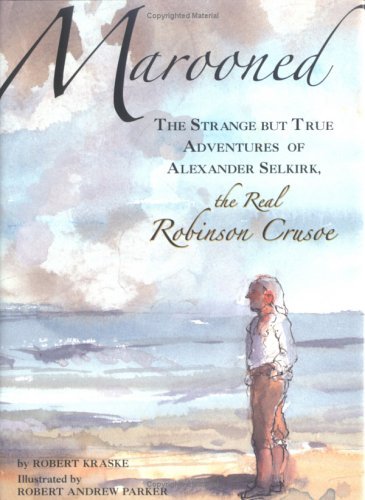


At more than a few writers conferences, skinny books are all the buzz – particularly in non-fiction circles. So what are skinny books? They’re thin – typically 28 pages – with glossy covers and plenty of illustrations or photographs. They’re typically stapled together, but they can be bound by glue. They’re often used in non-fiction, particularly biography, history and science, but are also found in fiction. If you think that skinny books are tough to define, you’re right, but here’s what really makes them “skinny”: they have fewer pages or words than other books in their category, whether they be picture or chapter books.

One reason skinny books work well in non-fiction is that they can be crammed full of information, tidbits and trivia without taking up much room or losing much narrative quality. However, hundreds of books are created or re-released as skinny books and manage to maintain complete story lines and character development.

Why Skinny Books Are Popular

  1. Kids think they’re a quick read.
  2. Readers can consume plenty of information in easy-to-digest format.
  3. They can easily be serialized.
  4. They are sold at an affordable, trade price.

The downside, of course, is that you don’t often see them in libraries. They’re not durable. The covers often tear off easily with repeated readings or mistreatment. Fortunately, they’re cheap to replace if you need to buy another one for your young reader.

Well, that’s the skinny on skinny books.


Wednesday, December 19, 2012

New Christmas Classic Picture Books

Five great new Christmas picture books.

There are plenty of classic holiday picture books out there. How the Grinch Stole Christmas by Dr. Seuss, The Snowman by Raymond Briggs and Olive the Other Reindeer by Vivian Walsh immediately come to mind. But there are plenty of new Christmas picture books to choose from. After all, Christmas is the season for giving, and publishers keep giving us new Christmas books (because they sell!).

Here are a few Christmas picture books I've thoroughly enjoyed.

  1. Bad Kitty Christmas – Nick Bruel returns to the picture book format that launched Bad Kitty in the first place. This time, he spins two stories into one book, the first featuring Bad Kitty’s antics early on Christmas morning told, as always, with a romp through the alphabet. The second finds Kitty on his own, with no place to go for Christmas, until he finds a caring stranger. Christmas gains a new and heartwarming meaning for both of them.
  2. Pete the Cat Saves Christmas -- Author Eric Litwin uses his rhythmic abilities to set a new Pete the Cat story to The Night Before Christmas. Santa’s sick and Christmas could be cancelled. It’s up to an enthusiastic Pete the Cat to deliver all the presents – and in the spirit of Christmas, he gives it his all. Illustrated by James Dean.
  3. Charlie and the Christmas Kitty -- Poor Charlie. Everyone’s favorite ranch dog gets a Christmas present he didn’t want – a cat! If your child balks at socks or sweaters or that thing they can’t figure out from Aunt Gertrude, then this book could teach them to appreciate it (even if it’s not as a kitten!). Written by Ree Drummond and Illustrated by Diane deGroat.
  4. Turkey Claus -- In this sequel to Turkey Trouble, Turkey’s still in trouble. He may have survived Thanksgiving, but now Edna wants turkey for Christmas dinner! Can Santa get him out of trouble? What’s our intrepid turkey to do? Written by Wendy Silvans and illustrated by Lee Harper.
  5. How Do Dinosaurs Say Merry Christmas?-- This series from author Jane Yolen and illustrator Mark Teague is a picture book phenomenon. If your little reader already knows How Dinosaurs Say Goodnight or I Love You, then this book is a great fit in the series. I mean really, Christmas wasn’t even around yet, so how did they say “Merry Christmas!”? And I know this one’s a week late, but there’s also a How Do Dinosaurs Say Happy Chanukah book, too.
 

So if you haven't picked up a Christmas picture book for your little reader(s) and are looking for something fun that they'll probably want to read next year (or they just like cats), try one of these new Christmas classics.


Friday, December 7, 2012

Branding for Local Authors


Create your author brand and make it stick.

When most people consider branding, they think Stephen King and J.K. Rowling, but these days, that’s less branding and more commercial juggernaut. People know what they want and expect from such authors, and when they don’t get it, they don’t buy (see Stephen King’s attempts at romance novels and J.K. Rowling’s post-Harry Potter novel).

Of course, there are plenty of authors who are master’\s at author branding. It doesn’t just mean your ability to create merchandising and film opportunities (in fact, that’s a very small part of it)—it’s about your ability to create a consistent image, niche or writing style. People want to recognize your author’s voice when they pick up your book. In short, they want to know what they’re getting ahead of time.

Plenty of authors are masters at branding. You know what you’re getting when you pick up a Dean Koontz or John Grisham book. The same is true of Mo Willems, Nick Bruel, Doreen Cronin, James Patterson and plenty of other top-notch, top-selling writers.  But local authors can develop big audiences, too, by developing a brand.

Let’s look at how two authors did it using two very different approaches.

  1. Zackary Richards. Zackary Richards has a brand that meets his personality. He’s brash, opinionated, loud and straight out of the Bronx. Sorry, da Bronx. His books are fast-paced with unforgettable characters, otherworldly plots, a bit of sex, a lot of violence, and intricately woven plots with turn after unexpected turn. This style remains consistent even when he changes genre. Zack mostly writes science fiction, but he’s written it for adults and young adults. He’s been able to use his brand to develop sci-fi, fantasy, religious themes and even non-fiction. How is his brand different than his “author’s voice?” Simple: voice can change from book to book, branding does not. When readers pick up a Zackary Richards’ book, they know what they’re getting, regardless of subtle shifts in genre, reader age, narrator, etc.
  2.  Tommy Moore. Comedian Tommy Moore used an approach completely different than Zack’s. His brand – clean, fun, funny, friendly and sentimental – existed long before he wrote his book, A Ph.D. in Happiness from the Great Comedians. Tommy had 40 years in stand-up comedy when his book came out late last year. His voice, his brand, and his platform existed. All he had to do was capture what he’d been doing on stage, TV and radio and put it on the printed page. He did it beautifully, allowing him to bring the two together and naturally promote the book through his stand-up and media appearances. Tommy is known as The Professor of Fun. Notice how his book offers a Ph.D. in happiness? That’s a terrific extension of his brand. Everything is tied together nicely.

Steps to Establish an Author’s Brand:
  1. Have a consistent voice.  Whether you're being an interviewed, writing a blog, telling a story, Tweeting, etc. have a consistent voice. If you write funny books, try to give lighthearted interviews. If you're philosophical, be poignant. If you check out Zackary Richards blog, you'll see how consistent it is with his novels. His readers pick up his books because they feel like they know, and fans of his books with turn to his blog to get updates on his work, etc.
  2. Have a consistent style. This doesn’t necessarily mean your voice within a story (first person vs. third, optimistic vs. pessimistic, male vs. female, etc.) but you need to maintain certain qualities. Even Mark Twain (another master at branding, despite changing voices drastically between stories), who drastically changed American literature and writing style in the shift between Tom Sawyer and Huck Finn, kept certain parts of his brand alive: life on the Mississippi, a reflection on American culture, and wry observations on subtleties in human behavior. 
  3. Know what your readers want. It’s almost impossible to jump from genre to genre, voice to voice, one you have a following. Change can happen, but it as to be subtle. Perfectly executing a radical change simply takes a genius most of us don’t have. (I know, disappointing, right? 
  4. Know who you are. Exaggerate the parts of you that are on the page. Be consistent. You don’t need to become an outright character or caricature of yourself, but make yourself as memorable as the characters you create. If your books are funny, be funny? Gritty, be gritty? Homey, be homey, etc. 
  5. Use your expertise. If you’re an expert in something, include it in your book. Write what you know. It will be believable, increase your interview and speaking opportunities, and help you carve out a niche in the populated world of popular authors. Start by reaching out  to local organizations that share your interests, or schools that teach your subject. Use your expertise, like comedian Tommy Moore. Make your expertise your brand.
Being a “brand” doesn’t happen overnight, but it can happen with the right approach. Your brand is your bond. Don’t break it.

Both authors had their work edited by AlbanyEditing, which assists with book editing and marketing.

Monday, November 26, 2012

How Can You Learn From Your Writers Group?


Our last post was all about what a writers group should do to help you. This post is about how you can help your writers group, and in turn, get the most out of the experience.

Your Role in a Writers Group: 

  1.  Show up. This one might seem obvious, but you’d be surprised at how many members attend meetings sporadically.  I’m not talking about those who come to a meeting or two and decide it isn’t for them; I’m talking about those who come to every other (or every other other or every fourth, etc…) meeting for two years straight. They want to write, but don’t want to put in the hard work. Work schedules and home life can get in the way, but not showing up on a regular basis shows a lack of respect for other writers’ work and a lack of respect for your own. How can you get better if you don’t make the meetings?  
  2. Listen to critiques. Even seemingly harsh comments are usually meant to help you, and almost all critiques contain at least one valuable insight. Don’t let somebody spend his or her time and energy reviewing your work and then ignore it. Not only are they fellow writers, but they’re readers, too. They will have some valuable first and second impressions. Apply some of what’s been said to your current work and future submissions. Don’t make the same mistakes again and again. That’s not getting better; that's stagnating. And like number one, it doesn’t show much respect for others’ abilities or your own.
  3. Try changes. Insert certain changes. Try them. Test them out. If they don’t work, you can always remove them. After all, you’re the final arbiter of what works in your submission. Listen to everything, then carefully decide what to use.  
  4. Read everything your group submits. You might be a veteran writer or a newbie with a novel idea. Either way, you’ll be surprised what you can glean from reading others’ work. You can learn from writers better than you, but also from those far worse. “Oh, I get it, do this, don’t do that.” “I can see why they did this, why on earth did so-and-so do that..?”
Remember, the members of your group are there to support you. Not only do they want to get better, but they want to see you turn in first-rate manuscripts, too. Most will cheer your success, console you during defeats, and live through your accomplishments. You owe it to them and yourself to submit the best work you can as often as possible. Learn, work and revise. Those steps will make you a better writer. And then, when it comes to your writers group, they’ll be happy to have you come to every meeting, and you’ll be happy to go since you’re improving your technique and talent. Participation makes you a better group member and lets you benefit tremendously from another’s expertise.


Help your fellow writers out: How have you made your writers group work? 

Tuesday, November 13, 2012

What Should a Writers Group Do?

Get the most out of your writers group after every meeting.

A writers group (or writer’s group, or writers’ group or however you want to spell it), also known as a critique group (or crit group) has certain functions. First among these is to serve the needs of every member, no matter what their level of expertise or ability. These needs will vary, but there are certain common goals.


Functions of a Writers Group:

  1. Make you a better writer. The goal isn’t to make you a better writer today, but for every day to come. If you apply the tips and suggestions you received to the next chapter, short story or novel, you’ll be a better writer. 
  2. Improve the piece you’re working on. Of course, a group must also improve the story you’re writing today. If members suggestions aren’t making your story better – or you see no reason to implement them – you may need to find another group.
  3. Make you professional. Well-written work makes you look professional, but a writers group should also make sure your manuscript is properly formatted. When you’re ready to submit your work for publication, it must be properly submitted. You should know publishing terms and trends. You should know about upcoming writers conferences and what agents and editors want. In short, you should understand the publishing industry. A good writers group can help you do that. If it isn’t, research the business yourself and help them.
  4.  Help you network. You don’t have to be a New York-based writer to network. Even writers in the most remote parts of the country will know a few local writers. At the very least, bookstores and other events will have them in-store for author signings. Meet them. See if they’ll talk to your writers group, or better yet, join it if they don’t have a group of their own. Use your group to network. It will help you achieve goal three.
  5. Meet regularly. A writers group must meet regularly, whether that’s once a month or once a week. If it doesn’t, you’ll never achieve goal one (and it will take a long time to reach goal two). If you’re in an online group, you still need to submit regularly. 
  6. Encourage you. Every writer, from unsure newbie to seasoned professional, wants to be published (or published again!). A writers group should let you know where you and your manuscript are in the process. Is it close? Is it far away? Is it never going to happen with this story? Critiques may sometimes seem harsh, but they’re the best way to meet goals one and two very, very quickly.
A writers group is only as good as its members, but a thriving, active group with lots of participation, submissions and feedback, is a great group – because whenever people are writing and rewriting, editing and critiquing, you’ll want to do it, too. The biggest advantage to being in a group is that it makes you want to write. And that’s the best way to reach the biggest goals: becoming a better writer and getting published.

So, if you’re in a group, make sure they’re doing the above. And if you’re not in a group, form one with these goals in mind.  They’ll make sure your writers group benefits all its members.


Sunday, October 21, 2012

What Book Changed Your Life?


Last weekend, at the Rutgers One-on-One Conference, author Bruce Coville discussed a fan letter he had received. A reader credited him with her decision to join the Peace Corps. She loved his book so much, she even cited it in her application essay. It’s clear that My Teacher Is an Alien changed that young woman’s life.

Everyone has a book like that, one that absolutely changed your life. I remember the greatest compliment I ever received came from an African-American actress, Dee Watson, who said, “You’d make a good Atticus Finch.”

Why was that the greatest compliment? Because To Kill a Mockingbird changed my life.  It has stayed with me decades after I first read it, and while it’s impossible to live up to the standard set by Atticus, it’s not impossible to model your life after the example set out in Harper Lee’s masterpiece.

Life-changing books  are common in young adult stories as teens enter their formative years. It’s also true of books like To Kill a Mockingbird, originally written for adults but that serve as de facto YA on high-school reading lists. Lives, decisions, and character are shaped every year by classics like Black Like Me, 1984, Pride & Prejudice, Crime & Punishment, etc. And no list, no matter how complete, includes the thousands of picture books, middle-grade and
YA titles children cling to every day.

Fortunately, adults can find books that reach them, too; maybe even make them see the world in a whole  new way. I recently re-read Tommy Moore’s A Ph.D. in Happiness From the Great Comedians. It lifts your spirits in a way far beyond “the healing power of humor;” it can change your entire outlook by presenting practical steps drawn from the world of stand-up comedy. It my case, it even justifies the years I spent in comedy and the fact that humor remains my primary tool for dealing with problems and reaching people. One book – a how-to book taken from the ways legendary comics view and treat the world – really can help you understand how you can live your life.

But it’s children’s authors and their books that have the biggest influence. Adult personalities are largely shaped and readers seek out books of interest to them, but children, particularly young children, are an (largely) empty canvas. They’ll face new ideas, new concepts, new challenges. They’ll read a book ten times (or have it read to them!) and still pick it up an 11th time. Even books that aren’t particularly challenging but that are delightful nonetheless – Fox in Socks, Don’t Let the Pigeon Drive the Bus, etc. – still create lifelong readers.

So whether it’s My Friend Flicka, Tom Sawyer, Encyclopedia Brown, Nancy Drew or something no one has heard of (or you’re too ashamed to admit – hey, I loved The Five Chinese Brothers as a kid), there was a book that changed your life.

So let me know – what book changed your life?